middle-asd-survival-guide
Survival Guide for MASD (Middle ASD)
(Table of Contents)
- Survival Guide for MASD (Middle ASD)
- (Table of Contents)
- Introduction
- Definition of MASD
- Understanding Traits and Strategies
- Knowing Laws and Systems
- Knowing Your Own Tendencies
- Securing Individualized Accommodation
- Conclusion
Introduction
Background
As of January 2026, awareness of neurodiversity is still insufficient. Especially difficult is the group within ASD whose abilities are neither particularly high nor low. They can’t compensate with exceptional ability, nor is their ability low enough to be comfortably accommodated within the standard disability frameworks. However, adapting to the norms and expectations of the neurotypical majority is either impossible, very difficult, or extremely draining even if possible.
I believe three approaches are all necessary for neurodiversity:
- 1: For the majority — especially those in management and leadership — to effectively utilize neurodivergent individuals
- 2: To demonstrate that there are benefits in doing so for neurodivergent people themselves
- 3: For neurodivergent individuals to understand their own traits and the current state of neurodiversity, and to proactively take control and defend themselves
This book focuses on 3:. For 1: and 2:, please refer to my other work (Japanese only).
Terminology
- Neurotypical
- Refers to those who are not neurodivergent
- They overwhelmingly constitute the majority in virtually any context
- Neurodivergent
- Refers to people with developmental disabilities such as ASD, ADHD, LD, etc.
- This term reinterprets “disability” as a difference in traits (brain nature) and embraces it as diversity
- Neurodiversity
- Applies the concept of diversity to developmental disabilities as well
- Reasonable Accommodation
- The precise definition varies by country, but it refers to providing specific accommodations to individuals with disabilities
- It does not mean simply yielding to the disabled party, but rather entails mutual adjustments
- While applicable to neurodivergent individuals, this term is outdated in concept and will not be used in this book
- Individualized Accommodation
- A concept proposed by the author as a replacement for reasonable accommodation
- Reasonable accommodation is norm-driven, first assuming adherence to norms, then passively considering special accommodations for disabled individuals
- Individualized accommodation is exception-driven, first giving the subject special treatment, then actively considering how much and in what ways to align with norms
Intended Audience
ASD individuals whose ability is neither particularly high nor low.
I will refer to this group as MASD (Middle ASD) throughout this book. This is a survival guide by MASD, for MASD, about MASD. It offers hints to MASD on how to live in this inadequate society—especially as a company employee.
Specifically, it is most meaningful for:
- Those who are MASD
- White-collar or desk workers
- Company employees
- Living in Japan and conducting daily life in Japanese
However, I believe it will also be useful to readers outside these categories. This guide avoids culture-, industry-, or organization-specific topics to make it broadly applicable and concise.
Disclaimer
- This book reflects the author’s personal opinion, not that of any organization
- The author assumes no responsibility for any damages arising from using this book
Definition of MASD
MASD
MASD (Middle ASD) refers to ASD individuals whose abilities are neither high nor low.
How to Determine if You Are MASD
First, you must meet the following essential criterion to be considered MASD. If you do not meet it, you are not MASD:
- 1: You have an ASD diagnosis certificate
If you don’t have a diagnosis certificate, please obtain one first. Self-diagnosis is acceptable, but this guide assumes ASD individuals with official diagnosis certificates who disclose their condition and take action accordingly. Diagnosis methods are discussed in the Diagnosis Methods chapter.
Next, the more of the following criteria you meet, the more likely you are MASD. Ideally, “ability” should be strictly defined, but since it’s difficult, these criteria serve as a practical approximation. If you are MASD, you should meet all or at least the majority. If not, you may not be MASD, or simply lack sufficient life experience to know.
- 1: You are an adult
- 2: Your IQ is between 86 and 114 (inclusive)
- 3: You have worked at your company for over 5 years without a single promotion
- 4: You meet all the following:
- Have had no partner for 10+ years or are likely to reach that point easily
- Have had no friend with whom you could spend several hours one-on-one purposelessly at least twice in 10+ years or are likely to reach that point easily
- 5: In competitive environments open to thousands nationwide — like exams or online games — despite “serious effort,” you cannot surpass an average level (deviation value 50). Or you do surpass it initially but fall below it within 3 years as competitors improve
- “Serious effort” means: spending 30+ hours per month, studying, and continuously improving your lifestyle for these activities. Occasional lapses are allowed if most months meet criteria.
Understanding Traits and Strategies
Understand your traits well. Understanding them makes coping easier.
Traits of ASD
Consider ASD as a disorder of the “cognitive nerves” rather than the motor nerves.
Motor nerves govern physical ability. If impaired, people cannot do basic physical activities ordinary people take for granted—e.g., climbing dozens of stairs, walking continuously for 30 minutes, cycling, driving, or playing ball games. Either attempts fail or require extraordinary effort.
ASD is essentially the cognitive equivalent. This book metaphorically calls it “cognitive nerves.” ASD affects the core of cognitive ability. People with ASD find it difficult to perform cognitive tasks that neurotypical people manage easily, such as:
- Processing 30+ minutes of nonverbal, orally delivered communication
- Filtering out all background noise to listen to the person in front of them
- Quickly adapting to changing situations without enforcing strict routines or personal rules
- Managing work, hobbies, and social life despite skipping three meals a day and not consuming 2000 kcal
- Multitasking effectively
- Advancing professionally, maintaining a household, and having friends to go out with
These are not matters of lack of effort, experience, or knowledge but rather insufficient ability. And that ability comes from cognitive nerves, which cannot be trained. There is nothing one can do about it. Meanwhile, society assumes neurotypical cognitive nerve levels and demands this from people with ASD unjustly.
Before Entering MASD Traits
Before diving into MASD traits, let’s discuss those above and below this group.
Among ASD, those with high ability (HASD, High ASD) have fewer difficulties or can overcome them easily. For example, high-IQ ASD individuals can mimic neurotypical behaviors better than neurotypicals themselves. Their processing power lets them brute-force their way. HASD individuals don’t meet MASD criteria—they tend to have promotions, partners, and the energy to immerse themselves in reading or hobbies.
Analogously to motor ability: even if one leg is missing, having the stamina to jump 10 meters 100 times, 2 meters 1000 times, and 50 cm 10,000 times can cover all daily needs. Or monetarily, having a disability but owning a billion yen. With ability, honestly, you can handle anything.
Conversely, people with low ability (LASD, Low ASD) find autonomous living difficult. For example, ASD individuals with IQ below 80 rarely manage living alone and working as regular employees. Usually, they live under parental care with diagnosis certificates and disability ID cards.
While economic and emotional support from parents varies, Japan’s systems sufficiently support this lifestyle. But MASD cannot live like LASD. No. MASD has higher ability than LASD, thus occupies a higher level.
Imposing a lower level than one’s ability (especially at work) is so extreme it can be called harassment. It must never be tolerated. Would you forbid modern humans from using smartphones or transport? Such demands are violent. Therefore, consulting MASD to live like LASD is itself abusive.
Traits of MASD
Based on the above, let’s explore MASD traits:
Two key points:
- Cannot compensate by ability, unlike HASD
- Cannot live at low levels like LASD (and must not be expected to)
Understand these as traits, not beliefs or strategies. MASD can’t become HASD nor lower themselves to LASD levels. Your neurotypical surroundings will likely advise LASD-like approaches, but do not heed them.
MASD is neither HASD nor LASD; therefore, cannot live as either.
This should be your frame of mind because it’s reality. Neurodiversity efforts remain insufficient. Even major Japanese companies praised for diversity barely understand this. It’s a harsh truth.
Therefore, only you can assertively manage yourself. The basis is to accept MASD as a trait beyond change.
MASD Strategies
ASD is a cognitive nerve disorder, and MASD is “neither HASD nor LASD.” Considering this, how should MASD behave?
The strategy is clear: avoid adapting to neurotypical standards as much as possible.
We will introduce a term for these neurotypical standards: Typical Level. There’s no strict definition—you may interpret it subjectively.
Examples include: eating with colleagues daily, attending after-work parties or events 2-3 times per month, spending over 3 hours daily in meetings or casual chats. These all represent typical level activities. Neurotypical cognitive ability enables these effortlessly; ASD individuals cannot do these easily or only with high strain.
However, typical level is “normal” and “expected” for neurotypicals and deemed necessary for smooth organizational operation. Therefore, failing to meet these is considered impossible. Thus, MASD must avoid these.
Avoidance is broad—it includes preparation, keeping distance, quick withdrawal, asserting oneself, or even confrontation. Unfortunately, these responses are common, happening frequently.
Restated: MASD must fight.
They must verbalize typical levels, explain why they can’t meet them, and possibly disclose their ASD status. They must persistently advocate for themselves. Avoiding conflict is preferable, but at work, it’s likely difficult to do so. Work inherently involves frequent communication, exposing MASD limitations.
Fighting may help secure individualized accommodations, but not fighting leads to death. Being saddled with impossible typical levels means losing in the long or medium term. You’ll be fired, emotionally drained, and may suffer secondary illnesses like depression or even bullying and violence in severe cases.
Does this sound exaggerated? Not at all. MASD likely already understand how unforgiving reality is. Historically, minorities of races or genders have fought similar battles and continue doing so. MASD are similarly heavily disadvantaged and discriminated minorities. Therefore, they must fight.
Of course, winning isn’t guaranteed, and these battles are hard. Strategize well. Usually, fleeing causes less harm than head-on fighting. Crisis situations for confronting head-on include: being fired unfairly despite performance issues caused by lack of accommodation; unjust evaluations impacting salary and livelihood; extreme excessive workloads; or ongoing harassment and bullying.
Let’s survive this unreasonable society together. This guide equips you with the weapons you need—knowledge and courage.
Knowing Laws and Systems
Knowledge of laws and systems gives advantages when fighting.
Laws
This section discusses Japanese law. Others must research their own countries.
Two key concepts:
First, “reasonable accommodation,” denoting companies’ legal obligation to provide accommodations—including for developmental disabilities.
Second, “open employment” and “closed employment” (open vs. hidden disability employment). Open employment means officially disclosing your disability and working under a special employment quota for disabled people. Though accommodations are generous, the work tends to be repetitive and pay is lower.
References:
- About reasonable accommodation
- Reasonable Accommodation Guidelines.pdf
-
[Prohibition of Discrimination and Reasonable Accommodation for Disabled Persons in Employment Ministry of Health, Labor and Welfare](https://www.mhlw.go.jp/stf/seisakunitsuite/bunya/koyou_roudou/koyou/shougaishakoyou/shougaisha_h25/index.html)
- Obligation to provide reasonable accommodation starts in 2024
Unfortunately, modern reasonable accommodation is often linked to open employment. As stated, MASD should not enter open employment because they are not LASD. Like neurotypicals, work should be done in the standard employment framework (closed employment), requesting reasonable accommodation accordingly.
Though this book uses “individualized accommodation,” this neologism is generally unknown. When advocating, it’s better to use “reasonable accommodation.”
Company Systems
It’s important to know your company’s reporting windows and methods.
Two points:
- 1: Know consultation windows outside your supervisor or department
- 2: Know internal whistleblowing channels and methods
Stronger pressure is needed to win individualized accommodation. First, find and note windows outside your department—e.g., HR, labor unions, I&D departments. Smaller companies might lack these, but large companies (1000+ employees) almost certainly have them. Check all departments and info systems thoroughly.
Yet, like point 1, company staff might be unreliable. That’s where internal whistleblowing helps. It’s reporting to company-established channels, mainly intended for harassment or fraud but can cover human rights—thus, you can report “lack of reasonable accommodation.” Internal whistleblowing is also company-run and sometimes unreliable, but recently some have been outsourced externally and remain effective.
When reporting, detailed textual accounts are required. Keep logs regularly. You can ask ChatGPT for help writing these. Record facts in chronological order—who did what, what happened. Exclude emotions and diary-like content. Especially collect “accommodation lack events,” e.g., “I proposed X as accommodation to Y, but Y didn’t respond.”
External Systems
Though I haven’t used them, these services exist:
- Guide to Dispute Resolution Assistance System.pdf
-
[Individual Labor Dispute Resolution System (Labor Consultation, Advice & Guidance, Mediation) Ministry of Health, Labour and Welfare](https://www.mhlw.go.jp/general/seido/chihou/kaiketu/index.html?utm_source=chatgpt.com)
This relies on advice and guidance by prefectural labor bureaus. However, scope is narrow:
Disputes concerning dismissal, contract non-renewal, unfavorable changes to working conditions
Workplace environment disputes such as bullying and harassment
Recruitment and hiring disputes (only eligible for advice and guidance, not mediation)
Critical cases like dismissal or harassment may be covered.
The last resort is litigation. I have no personal experience and will not elaborate further.
Strategy
Thus, your strategy knowing laws and systems is three steps:
- 1: Claim reasonable accommodation and secure individualized accommodation
- 2: If unsuccessful, use internal company channels, especially whistleblowing
- (2.5: Personally, try changing jobs inside or outside the company once)
- 3: If still unresolved, escalate externally to mediation or court
The bigger the steps, the greater the commotion. Using 2: will put you officially on the company’s radar. Especially in closed employment, you may be seen as merely “problematic low performer,” making you a firing candidate.
To counter this, you need a clear narrative: “I am neurodivergent and require reasonable accommodation but am currently underserved.” Since it’s legally mandated, unless you make extremely unreasonable demands, you have an advantage.
(Aside) Author’s Personal Experience
Japan has strict regulations on dismissal, but it’s not impossible. I personally faced a PIP (Performance Improvement Plan).
Even though I have communication and work style handicaps as MASD, I am technically more skilled than most peers. I have consistently excelled technically since joining the company, with demonstrated aptitude and no neglect of responsibilities. My GitHub reflects this. I was labeled a low performer simply because I lacked accommodations and thus work. Yet, I was placed on PIP.
The company claimed others were similarly affected, this was a natural outcome of moving to performance-based evaluations, and there was no intent to dismiss. However, I interviewed others labeled low performers and found I was the only one on PIP. Application appeared at managers’ discretion—likely I was chosen as a scapegoat or bully target. Despite being a formal company system, I was also ordered to keep quiet, increasing my suspicion.
Considering this a human rights violation and lack of accommodation, I made an internal report. The PIP was eventually withdrawn.
Be aware that responses to reports are slow—if no response after 1-2 weeks, escalate. This applies to all company inquiries. Generally, slow or ignored, so persistence is essential.
(Aside) How Much Is “Unreasonable Selfishness”?
In the strategy chapter, I wrote:
Unless we make extremely unreasonable demands, we have the advantage.
What counts as “unreasonable” depends on company and context, but my personal observations include:
- 1: Refusing to engage in dialogue
- 2: Inability to make specific proposals
First, refusing dialogue is typical in cases where courts have ruled against disabled workers. This includes missing meetings or ignoring messages.
In Japan, reasonable accommodation is often explained as “ongoing dialogue-based adjustment” and is a key focus in legal proceedings. Thus, rejecting dialogue is unacceptable.
Second, not being able to propose specific ideas is problematic. For instance, if MASD finds attending office daily hard and requests remote work, they must concretely propose how to work remotely: using Teams or Slack, holding regular remote meetings, using collaborative documents like Notion, Google Docs or Microsoft Loop. Without proposals, your requests look theoretical and unconvincing.
This is regardless of whether the company can understand or is motivated to implement your ideas. At least from your stance, making concrete proposals is better.
If you keep dialogue and proposals documented, you are unlikely to lose battles.
Common complaints like “no work” or “poor team/project fit” are typical but are largely management issues and not your fault. Still, to encourage dialogue, propose what you can and cannot do, and explore internal opportunities for work to suggest to your boss. Showing willingness helps avoid accusations of unreasonable demands.
Knowing Your Own Tendencies
As the name suggests, ASD forms a spectrum with no two people identical. If there are 1000 ASD individuals, there are 1000 patterns.
Yet no one will teach you your particular pattern or how you need accommodation. Doctors, counselors, or friends will rarely help, especially since MASD likely have few such friends. You must discover it yourself. Then request, “I have this trait; please accommodate me like this.”
Know yourself—what traits this ASD self holds, how to adjust, and ideally your strengths. This chapter offers hints.
Read Detailed Books
Many books exist on ASD, some focused on mechanisms and common patterns.
For example, I recently read “Autistic Spectrum Disorder (ASD) Employees Succeeding—Management Guide to Harnessing Talent”, a 300+ page solid book that I highly recommend.
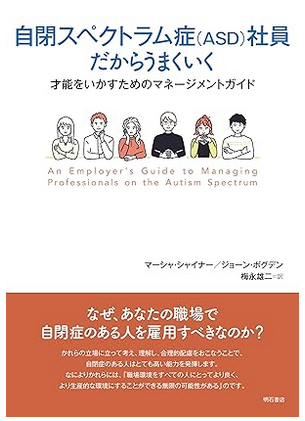
Another good book is “Unmasking Autism: A New World for People with Autism Spectrum Disorder”, which I have started. It explains the masks ASD people wear and covers ASD nature thoroughly in early chapters.
When choosing books, check if they delve deeply into ASD itself. Essays or opinion pieces may be interesting but not helpful. A simple guide: prefer titles that include “ASD” or “Autism Spectrum Disorder”—this implies specialist focus.
Books labeled just “developmental disorder” tend to be shallow and less useful. Also, books titled “Autism” or “Asperger’s” may not help much, often targeting HASD or LASD.
Feel free to ignore the book’s intended audience. For example, management guides for managers with ASD subordinates can be read by non-managers. Likewise, no need to feel interest in “the ASD perspective on the world” or reverence for “successful ASD people.”
No Need to Read Academic Papers
Some might think reading academic papers is best to understand ASD. Reading them is fine but likely too hard for MASD.
Those who read papers extensively are probably HASD—they have the curiosity, stamina, and intelligence to do so, and thus less struggle.
Another reason not to require reading papers: academic papers aren’t comprehensible to most people. Books can be recommended to managers, who then either read or are judged unable to accommodate if refusing. Recommending papers to such people is unrealistic.
If you work in academia, papers might be more effective. However, I doubt many MASD are in academia since that usually requires HASD-level intelligence.
Gain Social Experience
Information intake is only “knowledge.” To truly understand if a trait applies to yourself, you need to experience it.
Neurotypicals and HASD can imagine from knowledge alone, but MASD can’t. You must physically try.
For example, to know if you like or are suited for CPPF (Children, Partner, Pet, Friends), try gaining experience:
- Child interaction: volunteer opportunities
- Partner: try dating apps, matchmaking, or approaching acquaintances
- Pets: watch YouTube videos, visit pet shops, zoos, cat cafes
- Friends: attend lunches, drinking parties, or hobby groups
Evaluate these aspects:
- Interest
- Do you like it?
- More specifically, would you continue regardless of others’ opinions?
- Growth Potential
- Can you keep improving?
- If you’re savvy and in a good environment, you may continue without hindrance and build friendships or partnerships.
- Otherwise, you might get blocked or excluded before growth.
- Devotion
- Can you continually invest time and effort?
- Do you resolve to continue due to importance, despite likes/dislikes or aptitude, and persistently seek ways to do so?
- Or do you give up?
Social experiences vary, e.g.:
- Getting CPPF
- Maintaining CPPF (distinct from getting it)
- Working full-time with colleagues
- Interacting with customers in work—though desk workers also often have “people to treat like customers”
- Interactions at systematized places like fast food or at localized, personable stores
- Asking strangers directions
- Approaching strangers socially
- Attending scheduled interactive or experiential events
In short, investigate your degree of interest, growth potential, and devotion in many social experiences.
While neurotypical and HASD can generally achieve any of these or can train up to them, MASD cannot. There is clear division: can/cannot, want/don’t want. ASD affects cognitive ability, and MASD can’t compensate by ability like HASD.
Facing all social experiences simultaneously risks overload.
Therefore, it’s crucial to know in detail where you fit and don’t, where you might manage with effort, or where you simply can’t. Such knowledge enables coping and strategy. Without it, life becomes pure gambling.
Reflect on Yourself
Neurotypical people grow naturally just by living actively. They can avoid repeating past mistakes. In work, time and growth are often assumed proportional, with standards like “professional behavior,” “3rd-year employee level,” “skills expected of people in their 30s” applied.
This complex process breaks down as:
- 1: Acquire all essential skills and behaviors everyone should have
- 2: For strengths and weaknesses that complement each other, increase use of strengths and reduce use of weaknesses
This chapter focuses on 2:, which requires knowing your tendencies.
Can MASD do this as neurotypicals do? No. MASD do not have the ability to manage 2: internally and thus time may not equate to growth. For example, I was still mentored by three-month-old novices in my early apprenticeship despite being on my third year, and after over 10 years at my company, remain a rank-and-file employee with salary lower than new hires, with younger supervisors. Yet, I’m performing relatively well for MASD by knowing my tendencies and strengthening my strengths. Writing a document like this is natural to me.
In short, MASD cannot grasp tendencies or grow solely by thinking inside their head. It’s a structural problem, not solvable by effort.
So what to do? Externalize understanding. That is reflection.
Reflection here means performing both:
- 1: Reviewing the past based on records
- 2: Setting actions for the future
The key is to rely on records, not memory. Also, to move forward, you must “set” something to act on—just being mindful isn’t enough, you must install behavior. For example, if a shaky desk lowers performance, arrange fixing or replacing it. Enter reminders in scheduler or add notes to shopping lists for actions.
Think of it as task management on steroids, like an obsessive businessperson, life hacker, or obedient robot—that’s the vibe, and it’s correct. Intentionally systematize your life for success.
This involves various self-help, productivity, or life hack techniques, but fundamentally:
- Concerning record-keeping:
- 1: Daily logging of tasks, thoughts, feelings (daily log)
- 2: Weekly review based on 7 daily logs, producing weekly logs
- 3: Monthly review based on 4-5 weekly logs, producing monthly logs
- Concerning actions:
- 4: Consider flow lines (places you pass several times daily) and place next actions along them
- 5: Use reminders with alarms before scheduled times as needed
- 6: Write daily tasks in daily log and progress through them one by one interacting with real life (list-driven life)
Though it sounds complex, these are basic productivity techniques. Study task and note management for deeper understanding and customize to you.
Choose tools as you like: analog pen & paper, notebooks, or text files and software—recently phone apps too. Personally, I recommend desk-based tools—either computer or analog. Smartphones are less suited due to small screen and typing inefficiency. If you can manage smartphone-only, that’s fine, but it’s tough for MASD.
If you lack a desk or private space to focus for 2-3 hours daily, first aim to acquire that. This might be tough, but it’s MASD’s fate. Only with a sanctuary—your own organized, undisturbed castle—can you live or work decently and achieve autonomous living.
Without it, MASD become dependent on others, which fails as they lack the savvy and ability to maintain equal relationships. This can lead to masking—extreme self-monitoring to avoid displeasing others—or repeated forced matching attempts. Both lead to burnout and harm. Such abusive life is only possible for neurotypical or HASD people.
MASD must fundamentally live in solitude, supported by systems to regulate and support their growth and actions—daily logs, flow lines, reminders, list-driven living—plus a sacred desk.
Maintain Constant Resilience and Health
To review: No one teaches you your tendencies, and finding out takes time. You must ingest information, reflect on your actions, compare yourself socially (requiring cooperation). Being MASD means you must systematize life deliberately. You’re human but must live like a robot to survive reasonably.
This is exhausting. You cannot function while tired. So, rest adequately or create rest time even if it requires conflict or escape. However, too much isolation harms mental health.
Therefore, you must maintain resilience and health constantly.
I call it “like an athlete.” MASD wanting to know themselves should live as strictly as an athlete. For example:
- 1: At least 7 hours’ sleep per day
- 2: Eat 3 proper meals daily
- 3: At least 3 hours daily alone without interruption
- 4: Avoid more than 1 continuous hour of social time (insert short breaks before one hour)
- 5: Maintain overall good health on checkups (weight too low is likely natural)
- 6: Maintain physical ability to ascend 100 stairs or walk 30 minutes without strain
Many fail these but manage life only due to superior ability—neurotypical or HASD brute strength. MASD cannot pull this off.
These are general examples fitting many MASD, but tailor your own. For example, I specifically adhere to 4: no over-1-hour social time continuously. MASD expend great effort communicating face-to-face, so their communication is more explosive than sustained. Frequent breaks and limited daily social exposure are essential.
Define your principles and live strictly. Use books, videos, AI generation, gather tips, and build your style. If limits cannot be met due to environment or responsibilities, either escape cause or fight it.
For instance, work should ideally end on time daily, commute under 1 hour one way, preferably with much remote work. If not achievable, attempt internal or external job changes or insist on individualized accommodation. If these fail, prepare to fight even at the cost of self-destruction.
Balancing this is difficult. Later chapters discuss this more. While fighting fiercely improves chances, it also increases risks of exclusion and bullying. Passivity risks slow defeat, like boiling frogs.
Securing Individualized Accommodation
So far, you have learned about MASD traits, laws and systems, diagnosis certificates, and knowing your tendencies. Now, it’s time to fully use all that to secure individualized accommodation.
This chapter outlines concrete strategies, based on my experience and careful thought. Not all will fit everyone. Adopt what suits you or reject as a cautionary tale.
Controlling the Balance of Three Elements
For MASD strategy, I believe you should grasp the balance of three elements:
- Devotion
- How much you can dedicate your life to the job or environment
- Skills
- Some abilities either absolutely or relatively valued for being selected or assigned work
- Communication Control
- Controlling how people communicate with you
Explanation of Each Element
Let’s break down these elements.
Devotion is the degree to which you surrender your rhythm or style for the environment or work. MASD often have strict routines (sometimes unconsciously). However, work requires communication and adapting to the environment. You may either stick to your way or bend to fit. The latter is called devotion here.
Skills are those abilities that require training to acquire—hard skills like programming, writing, remote work techniques, autonomous exploration without correct answers, content distribution (blog, GitHub), codifying tacit knowledge and culture, creative collaboration facilitation, plus certifications. Skills help you be “chosen” either by meeting absolute criteria or relative standing.
Communication Control means managing how others communicate with you. Simply put, it involves “how much you are disliked and kept at arm’s length” or how much you are treated as a delicate object. Because MASD cannot survive typical or high communication loads, communication volume must be reduced deliberately to below-average. Without control, this is impossible. You have to be disliked—but not so disliked that you’re ousted.
Self-Evaluation Using LMH
Next, evaluate each element as Low (poor or many failures), Middle (can do but unstable and draining), or High (can do well and reliably). This defines your type.
Here are some examples:
| 1. Devotion | 2. Skills | 3. Communication Control | Type |
|---|---|---|---|
| H | L | L | Devotion type. Probably exhausted to the point of life disruption… |
| H | M | L | Devotion type with skills; possibly valued and stable at work |
| H | H | - | Not applicable. MASD likely can’t achieve both Hs |
| H | M | M | Not applicable. MASD likely struggles; high devotion alone causes exhaustion |
| L | H | L | Craftsman type; low devotion and control, high risk of exclusion or firing |
| L | H | H | Craftsman type; openly treated as fragile, stable employment but hard to enter |
I’d evaluate myself as Low/Middle/High roughly.
I have low devotion, which causes conflicts, and I refuse to exhaust myself. However, low devotion risks unemployment or worse, so I use communication control to start as a “fragile object.” My 10+ years’ experience bolsters this. I show my ASD diagnosis when needed and try improving skills to contribute. I focus on strengths and apply them to my current role.
This profile means I communicate and work less than average, am rank-and-file, but proactively seek work and approval. I’m recognized inside my company partly due to public posts like blogs.
This is one example; adopt strategies suitable for your type. Fighting above your type leads to collapse.
If unsure, try increasing devotion, intensively building skills useful at work, or aiming to reduce meetings under 2 per week via communication control, etc.
How to Improve Each Element > Devotion
Devotion is not about testing endurance but more importantly, compressing your life as much as possible.
If routine daily chores take 1 hour vs. 3 hours, the former gives more life flexibility.
More directly, how much free time you can create matters. Ideally, about 4 hours a day—time you can spend as you wish, even wasting time on old manga or games. During devoted times, you spend this free time addressing needs.
Think of free time as a resource used to cover devotion. The larger the resource, the easier the response.
Therefore, life hacks, minimalism, and similar compact life techniques are extremely important. MASD have low ability and must fully exploit such techniques for a leaner, more agile life.
Those struggling likely fall short here. For instance, recall CPPF (Children, Partner, Pet, Friends)—not having any CPPF is basically mandatory. Without this simplicity, MASD can’t live decently. ASD is a severe handicap, MASD can’t cover it by ability like HASD. They must slim down and maximize mobility.
Harsh? Yes. MASD’s curse is as severe or more than racial or sexual minorities. You might see ASD individuals optimistically discussing their condition, but they’re likely HASD able to cover by ability. Don’t accept their optimism uncritically. Those people don’t meet MASD criteria.
We MASD must accept this harsh reality and strengthen ourselves, at least until neurodiversity improves substantially beyond 2026.
How to Improve Each Element > Skills
Skills divide into hard and soft.
Hard skills are demonstrable abilities (e.g., certifications, job experience). Hard skills need studying and financial investment—certifications can cost thousands of dollars. Job experience requires being employed. It’s verified through interviews or tests.
Soft skills include communication, management, self-management, leadership, creative thinking, ability to work full-time onsite or remotely, etc. Soft skills are harder to demonstrate and are often implicitly expected. Lack of soft skills may allow job matching but cause agony later. Often these remain unrecognized and unimprovable.
For example, requesting “I am morning-type so can’t work night-shift, want 6:00–15:00 flex” may be baffling to indifferent employers. Many neurotypicals view their way as singular and immutable, making accommodations difficult and rare. Actually, rigidity is a key neurotypical trait; they’re poorly adapted to individual accommodations. That’s why MASD must fight.
To improve skills, the most reliable way is working. Work provides opportunities to handle equipment, environments, and people unreachable solo. Skill level correlates with work volume.
Promotion or better job offers indicate gaining skills. If you can’t achieve these, first secure work allowing skill growth.
Large corporations with many internal roles and slow promotion paths suit easier movement compared to small companies or temp jobs.
Choosing workplaces that allow sustained work is crucial. That requires education and credentials—either degrees or certifications. So studying remains important.
I studied hard in school, being top in my low-ranked school. That’s not possible for adult readers; currently, getting certifications or advanced degrees is realistic.
Balancing graduate studies and work is near impossible for MASD. If one could, they’d likely already be HASD and not qualify as MASD.
Studying suits MASD well as they often have spare time and can maintain sustained effort consistently. Still, they won’t reach top standardized test scores or professions like law or medicine.
E.g., studying 2 hours daily for 1 year can yield some certifications. I obtained basic and applied IT certifications plus AWS Solutions Architect Associate in 2025 as requested by my boss.
Another path is having an extraordinary skill or hobby. For example, a YouTuber with 100k subscribers may be valued even without degrees. Or owning famous websites or winning major sports titles may get you hired primarily for those skills. Pro athletes are hired largely to play sports.
This path is rare, requiring exceptional achievements or popularity. For MASD, this is mostly unattainable. Still, less extreme achievements (like 10k subscribers) might attract offers.
This depends on how well you present yourself.
Summary:
- To grow skills, you must keep working steadily
- To keep working as MASD with ease, study and credentials are vital
- Extraordinary talents can override degree requirements but lack reproducibility
If unavailable, self-training is the alternative.
Self training includes any methods except formal job experience—this guide does not cover them exhaustively.
My advice for MASD:
- Prioritize narrow, deep focus over broad, shallow
- For example, to develop soft skill like note-taking, don’t jump between apps; pick one and use it for years
- I myself use Cosense, GitHub, Markdown + Hidemaru Editor, and restrict AI use to OpenAI
- Invest properly in tools
- E.g., spend thousands on keyboards/mice if using a PC
- MASD learn more by doing than by thinking; tools must be reliable and efficient
- Spending money on essential tools is a priority—even saving money is about enabling such spending
- Uphold your preferences
- Continuing what you already care about supports persistence
- Use existing preferences as a base; explore new skills as detours
- Neurotypicals quickly acquire skills without preferences, but MASD need to wield preferences as weapons
- I’ve long used computers and typing for communication, so I focus on that rather than speech skills; otherwise, I might get stuck in neither area
A shared principle: Choose and focus; acquire skills one at a time. MASD have low ability and struggle to learn many skills simultaneously or quickly. Accept slower speed and persist.
Also, essential skills require practical experience; seek opportunities to immerse yourself.
“Communication skills” commonly cited as necessary are perfect examples. I worked in customer service during university and have used various services to improve intimate relationships later. Such training requires money, so saving money to afford skill-building is critical.
How to Improve Each Element > Communication Control
“Communication Control” is an original term and can be a difficult idea. Before explaining how to improve it, let’s explore more.
It refers to controlling the amount of communication directed at you, directly or indirectly. Managers need to increase communication; MASD must do precisely the opposite, drastically reduce communication volume.
Thus, MASD must influence others to allow less communication than usual.
Practically, MASD strategies are limited: becoming a “delicate object.” Numerous communication theories and techniques exist but all require quick, flexible interpersonal responses—impossible for MASD. Therefore, MASD must arrange to be disliked or “off-limits” from the outset or as soon as possible.
Equivalent expressions:
- Becoming a “delicate object”
- Being disliked
- Being perceived as hard to approach
- Being physiologically unpleasant to others
However, being disliked too much risks firing or bullying—“critical damage.” Communication Control means balancing being disliked without suffering critical damage. Constant balance-seeking is necessary.
How to train this? Two points:
- 1: Know vocabulary to understand people and organizations
- 2: Get used to self-assertion
“Vocabulary” here means concepts and terminology to understand organizational communication styles.
For example, the book “Intercultural Competence: Essential Education for Business Persons Understanding Self and Others” explores this:
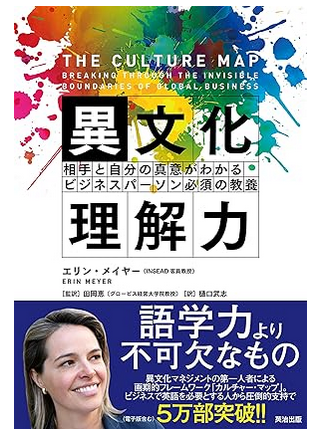
It maps cultures on communication, evaluation, influence across eight dimensions. Communication styles may be high or low context. Feedback styles may be direct or indirect negative feedback. These are vocabularies.
Knowing these helps you understand, e.g., “This organization uses indirect negative feedback, so I shouldn’t give direct negative feedback to my boss publicly.” Conversely, to become a “delicate object,” you might deliberately give direct negative feedback.
This is communication control’s basis: understand party vocabularies, then deliberately behave slightly “off” to gain dislike and reduce communication volume. Trial and error refines your position.
Another analogy comes from software design patterns—“adapter pattern,” where a mediator handles interactions between two difficult parties. MASD can apply this by limiting direct communication mainly to supervisors, avoiding teammates. This is my “adapter strategy,” central to communication control.
Without vocabulary, you cannot act effectively. Studying (as earlier discussed) is essential. Build your vocabulary in any field—organizational theory, culture, programming, IT, anything.
Second, getting used to self-assertion means practice asserting “to be disliked.”
Since you can’t simply annoy people at work, increase exposure elsewhere in personal life: upload on YouTube, engage in dating/matchmaking services, practice street sports, attend events and ask basic questions, dress conspicuously but non-disruptively, etc.
I recommend street sports—it exposes you to public observation and requires balanced behavior. Some participants behave badly, but don’t imitate that. Aim to “badly stand out but avoid attention of censure.”
Do what resonates with you. I’ve practiced parkour, rope skipping, breakdancing, braveboard, shuffle dance, etc.
Increasing exposure helps practice self-assertion needed for communication control. Neurotypicals often struggle with self-assertion or it isn’t part of their norms, so for MASD this can be a strength.
Avoid Being Managed
In neurodiversity discussions, some wrongly desire more management—or micro-management—completely misunderstanding the issue.
MASD should avoid being managed as much as possible.
Put bluntly, being left alone with freedom and evaluated on outcomes works best. I call this creator treatment—being treated like a creator with freedom and room.
Why? Because management and MASD don’t mix.
What is management? Management fundamentally imposes high-load communication or high-load processes. It exists as teamwork-based flexible management or governance-based strict process control. MASD can’t handle either—their ability is too low for communication or rigid processes.
Processes on sites often become partially null and void, but MASD can’t read the implicit rules and atmospheres around exceptions. So management and MASD clash.
People may think “ASD prefers routines,” but that is misunderstanding. MASD stick to routines out of necessity to compensate for low ability, not out of affinity for all routines or processes. HASD can adapt broadly, LASD can endure very low-level work. MASD are neither.
Therefore, MASD should act to minimize management.
Signs of low management include:
- Few meetings, ideally less than once a day and under 30 minutes total daily
- Frequent “mute days” (days without spoken conversation), multiple times per week
- No need to interact with sensitive parties like executives or external clients
- No daily progress follow-ups (no daily meetings or reports)
This may seem impossible to get work done, but must be negotiated. MASD deserve accommodations light enough to endure for months or longer.
Admittedly, agile methodologies (especially Scrum) make avoiding daily feedback hard; but accommodations to exempt MASD from such rituals should be sought.
This requires MASD initiative and autonomy. Like AI responding to instructions, MASD want context and tasks, then freedom until checkpoints (e.g., weekly review meetings). Between checkpoints, MASD desire free solo work.
MASD must also show motivation and build trust; otherwise, micromanagement may increase, to everyone’s detriment. Micromanaged MASD have near-zero working chance.
Creating trust is vital. I personally emphasize:
- Rapid asynchronous communication responses. I reply to all messages and react (unless wide announcements). Never ignore messages. Though oral communication is weak, asynchronous response speed wins trust.
- Transparent daily progress notes. I keep extensive logs in Microsoft Loop, Zoom Docs, Notion, or Box Notes, covering daily research, thoughts, and outputs. This transparency shows I’m working diligently daily.
Eliminate Irregularities
ASD’s attachment to routines and sameness boils down to compensating for ability deficits.
In motor terms, neurotypicals can run 1 km in 2 minutes and a marathon under 2 hours easily. Thus, flexible reactions are no problem.
ASD is like missing one leg; even 1 km or a marathon is a serious challenge.
This illustrates the brutality of imposing neurotypical levels on ASD.
To survive, MASD must reduce energy consumption. Hence, they cling to routines and sameness.
This mindset is valid and should be refined deliberately.
Aim to remove irregularities from your life.
A prime example is school. Japanese schools have very rhythmic days with fixed times and periods, consistent schedules, known equipment use, and static question points. For ASD, this is near-ideal.
However, school rhythms are human-made and may not fit you. Only you can develop your own rhythm, especially since company life differs greatly from school.
Key points to meet:
- 1: Live alone
- 2: Fix meal times daily (±30 min)
- 3: Fix wake and sleep times daily (±30 min)
- 4: Leave work on time; no overtime
- 5: Zero meetings or events overrunning by 3+ minutes
- 6: Zero “waiting in line” events with unclear end times
- 7: Adopt morning-oriented lifestyle to achieve above
These 7 are basics. Only after fulfilling can you consider yourself at the start line. MASD cannot achieve peace without such a fixed rhythm.
Performance-incompatible lifestyles force survival by anchored rhythms, and these 7 form solid groundwork.
However, morning type may be impossible for some, especially under 20s often called “night owls.” Don’t push too hard on this.
After reaching the start line, build and refine your rhythm.
For example, I fix daily news reading, shopping, cleaning, exercise, walks, and mental tasks scheduling. Also, to avoid burnout from constant new input, I allocate “re-reading time”: re-reading manga or re-watching videos commonly seen before. This may take 1 hour daily or sometimes over 3 hours.
Though this might feel wasteful, MASD can’t manage otherwise. This is okay.
I digitally buy manga ebooks and subscribe to YouTube Premium for smooth re-reading—expenses I consider necessary. To offset costs, I cut spending on cars, hair salons, socializing, and clothing.
My routine may suit only me, but shows a well-optimized rhythm. You should build your own rhythms likewise.
Conclusion
This book was written as a survival guide by MASD, for MASD, about MASD.
At the start, definitions and terminology were given. The guide aims to help MASD secure individualized accommodation and distinguishes MASD from HASD and LASD. MASD is arguably the hardest group. That’s why I wrote this guide: to help my fellows.
After definitions, the core explained MASD traits and coping. I likened it to a cognitive nerve disorder—lack of ability—and that ability is unchangeable, requiring acceptance.
Next, laws and systems were summarized. Knowing laws and internal/external systems, fighting even via reports may be necessary. MASD cannot sustain disguise like HASD, nor reach LASD’s level with disability IDs, nor should they. Even in 2026, accommodations remain patchy; MASD must proactively claim and fight.
Diagnosis certificates and disability IDs were clarified: MASD don’t need disability IDs and only require one diagnosis. Companies may push for repeated assessments, but this is ignorance.
Finally, methods for knowing tendencies were introduced: input via books, accumulating social experience, reflecting daily, and sustaining resilience and health much like an athlete. Strict but feasible given MASD traits.
Practical strategies to secure individualized accommodation were shared: the independent three-element framework (devotion, skills, communication control), avoiding management, and establishing fixed life rhythms.
That’s all. How was it?
This guide represents my 20 years of struggle distilled into know-how. I aimed to make it accessible to many, though reproducibility and generality remain unproven. I hope it benefits many MASD individuals.